By Gabriel Atumeyi (Agribusiness Magazine)
Nigeria’s livestock sector has quietly become one of its most valuable, yet underutilized, national assets, estimated at a value in the tenths of trillions of Naira. With urbanization accelerating and population projections pointing toward nearly 400 million by 2050, the country faces a looming protein gap. In short: Nigeria must shift from traditional pastoralism to commercial agribusiness—and fast. The prize? One of Africa’s most compelling agricultural opportunities.
The Scale, The Shortfall, And The Cost
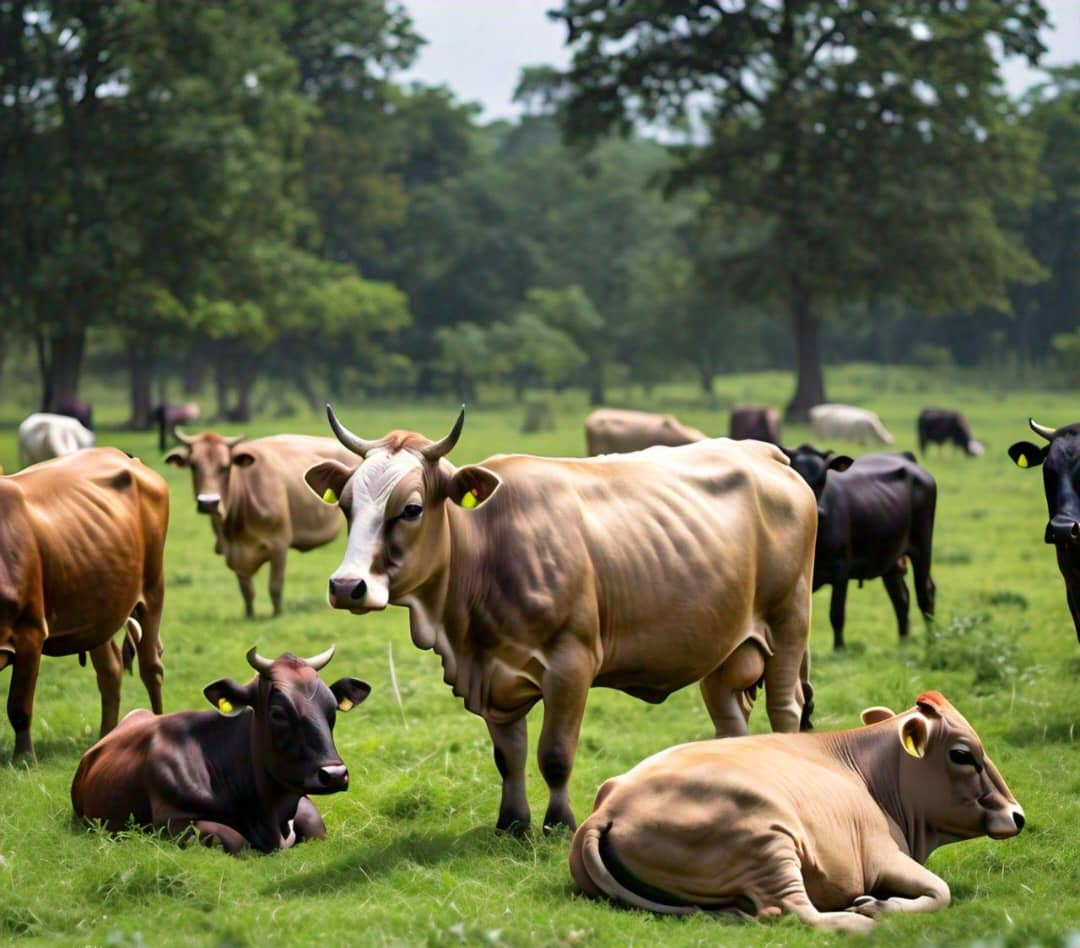
Nigeria has a vast and diverse livestock base. According to multiple government and sector sources, it holds over 20 million cattle, alongside 60 million sheep and upwards of 1.4 million goats. Poultry also ranks prominently: Nigeria is one of Africa’s leading producers of eggs and maintains hundreds of millions of chickens.
Despite this richness in animal numbers, domestic production lags demand sharply. For example, milk production in Nigeria stands at around 700,000 metric tonnes annually, whereas consumption is estimated at 1.6 million tonnes—leaving a deficit of roughly 60%. Because of this gap, Nigeria spends between US$1.2 billion and US$1.5 billion each year importing milk and dairy products.
One striking metric: many indigenous cows produce only about 0.5 to 1.5 litres of milk per cow per day, a stark contrast to global standards where high-yield breeds may produce six litres or more per day.
In broader protein terms, per capita consumption of milk, meat, and eggs in Nigeria remains well below global averages. For example, annual milk consumption per person is about 8.7 litres, compared to recommended levels and to the consumption seen in many other countries.
Key Obstacles to Unlocking Value
Several structural and institutional impediments continue to suppress productivity and market capture:
Pastoralism / Open Grazing Conflicts: The traditional nomadic system places herders and farmers in frequent conflict over land and water. Such clashes—and the insecurity that they bring—hamper investment, raise the cost of production, and create risk for large-scale operations. The National Livestock Transformation Plan (NLTP) was in part designed to address this model’s unsustainability.
Breed & Genetic Limitations: Most of Nigeria’s cattle are indigenous breeds or local cross-breeds, which have low yield in milk, and are poorly adapted (in many cases) to intensive dairy production systems. To close the yield gap, the government has begun importing high-yielding dairy breeds—such as heifers from Denmark—and launched a national genetic resources strategy in partnership with the FAO.
Feed, Inputs, Veterinary Support, and Infrastructure: Feed scarcity and cost are major constraints. Many producers have limited access to quality fodder, veterinary care, or organised cold-chains and milk collection systems. Also, the lack of reliable rural roads or energy means post-harvest losses and spoilage are high.
Institutional, Policy & Financial Gaps: Over decades, policy support for the livestock industry has been sporadic. While NLTP (launched in 2019) offers a roadmap, implementation has often lagged due to funding constraints, land tenure issues, and coordination challenges across states.
Policy & Private Sector Efforts: A Runway for Transformation
Several recent developments suggest momentum is building. If fully realized, these initiatives could help unlock much of the economic opportunity embedded in Nigeria’s livestock asset base.
National Livestock Transformation Plan (NLTP): Originally conceived in 2019 to replace open grazing with more organised ranching, better grazing reserve management, and to reduce farmer-herder conflicts. It includes pilot ranches and model grazing reserves, first in Nasarawa, Kaduna, Adamawa, and Plateau states.
National Livestock Growth Acceleration Strategy (NL-GAS): Announced more recently, this initiative is targeting a doubling of milk production—from 700,000 tonnes to 1.4 million tonnes—by 2030. Key pillars include breed improvement, nutrition and feed-fodder development, value-chain transformation, improved animal health, and greater inclusion of women and youth.
Importation of High-Yield Animal Genetics & Registered Pasture Species: As noted, Denmark-bred cattle are being brought into the country; eight new pasture species have been formally registered—representing the first such registrations in decades. These moves strengthen both the input side (better breeds; better feed sources) and support required for intensive systems.
Pilot Ranches & Model Reserves: States such as Nasarawa have inaugurated ranching hubs under NLTP; grazing reserves are being gazetted and multiple states have established committees and structures to support implementation.
Foreign Investor Interest & Partnerships: International donors, private sector agribusiness firms, and foreign governments are showing interest. Entities such as the FAO, EU, and private dairy companies are engaging with Nigeria to scale innovations and inject capital.
What Needs to Shift: Performance Levers
For Nigeria to truly harness its livestock value—transforming what is now a low-return, high-risk sector into a scalable agribusiness engine—several levers must be pulled:
- Breed Upgrade & Genetics Scaling: Expand access to high-yield dairy breeds through importation and cross-breeding programmes; establish better genetic resource institutions; ensure animal health and biosecurity standards.
- Feed & Fodder Base Improvement: Invest in forage species development, expand pasture lands, improve feed supply chains, and reduce costs of feed ingredients. Different ecologies of the North and Middle Belt must be leveraged for year-round fodder production.
- Ranching & Value-Adding Infrastructure: Cold chains, milk collection centres, processing units, and better transport infrastructure are essential. Also, making grazing reserves functional and managed will reduce losses and improve supply consistency.
- Conflict Resolution & Land Governance: Well-defined grazing rights, conflict mediation, and legal frameworks to support settled ranching are needed. The social and security costs of herder-farmer conflict are large: some estimates place annual losses in infrastructure, lives, and opportunity into the trillions of Naira.
- Policy and Institutional Reform: Strong oversight, clarity in land policy, incentives for private investment, funding of state-level institutions, regulatory clarity around dairy and meat importation and substitution, and effective execution of NLTP and NL-GAS.
- Inclusive Models & Finance Mechanisms: Smallholders, pastoralists, women, and youth need to be integrated into the transformation, not displaced. Financing—whether through credit, public-private partnerships, or value-chain financing—must be accessible. Technical assistance, extension services, and market linkages must reach grassroots.
The Upside: Returns & Strategic Opportunities
For investors, government, and communities alike, the potential returns are substantial:
Import Substitution & Foreign Exchange Savings: With $1.2–1.5 billion spent annually on dairy imports, reducing dependency can save foreign exchange and redirect value locally.
Job Creation and Rural Development: Ranching, feed production, veterinary services, processing plants, logistics, and ancillary services offer multiple employment points, especially in rural areas.
Higher Protein Availability & Nutrition Security: Improved domestic production can raise per capita consumption of milk, meat, and eggs—helping close nutrition deficits, particularly among children.
Environmental & Climate Co-benefits: Well-managed grazing reserves and settled ranching reduce overgrazing, soil degradation, and conflict over natural resources. Better health services also reduce disease spillover.
Scalable Value Chains for Exports: As production stabilizes, there is opportunity for export to neighbouring countries in ECOWAS and beyond, particularly for processed meats, dairy, hides, and leather.
Conclusion
Nigeria’s livestock sector represents both a deeply embedded national asset and an underleveraged opportunity. With over 20 million cattle, substantial small ruminant and poultry populations, and increasing domestic demand, the foundations are in place. The challenge is not about supply alone—it is about transforming systems: genetics, feed, infrastructure, institutions, and conflict management.
The National Livestock Transformation Plan and newer strategies such as NL-GAS offer blueprints. The next phase must be execution—aligning state governments, harnessing private capital, empowering pastoralists, and scaling models that work. If Nigeria can overcome its current bottlenecks, the sector could move from “traditional, low-yield pastoralism” to being a pillar of its agroeconomy, supplying protein, creating jobs, and capturing value—both locally and regionally.