By Eneojo Herbert Idakwo
On a small farm outside Minna in northern Nigeria, Ibrahim Musa bends over his cornfield. Unlike his father, who battled armyworms year after year with chemical sprays, Ibrahim planted a genetically modified (GMO) variety. This crop carries a gene borrowed from a soil bacterium, Bacillus thuringiensis (Bt) — that makes it resistant to pests. For Ibrahim, the difference is night and day: “Last year, I lost half of my harvest,” he says. “This season, I am seeing something close to a miracle.”
But what exactly is this “miracle”? And why does it spark so much debate across the world?
What Are GMOs?
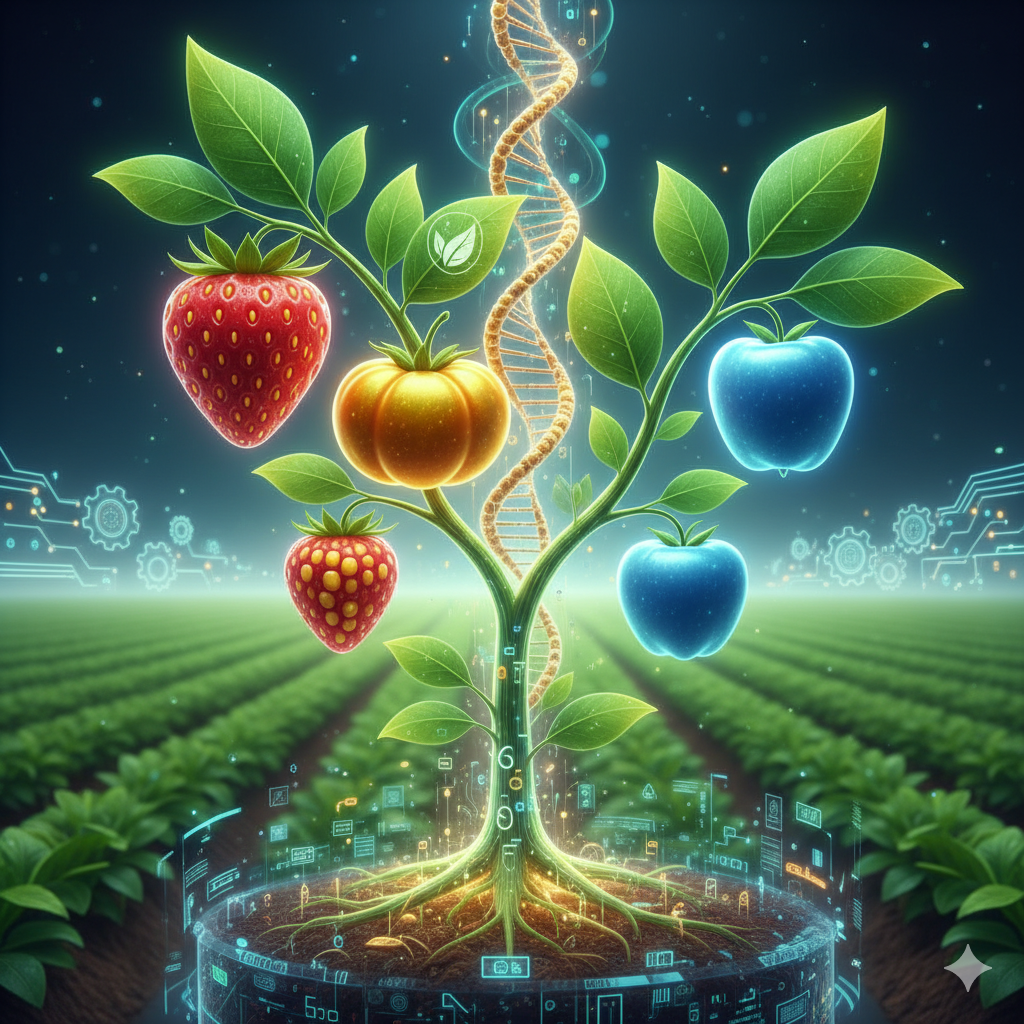
Genetically Modified Organisms (GMOs) are living things whose DNA has been altered using modern biotechnology. Scientists take a gene with a desired trait, for example, drought resistance, faster growth, or natural pesticide properties, and insert it into a crop. The result is a plant that expresses this new trait.
Unlike traditional crossbreeding, which farmers have practiced for centuries, genetic engineering works at the molecular level and can even cross species boundaries. Corn can carry bacterial genes, soybeans can tolerate herbicides, and rice can be enriched with vitamins.
The Promise of GMOs
Advocates say GMOs hold the key to solving global hunger. With the world’s population expected to hit 10 billion by 2050, the pressure to produce more food with fewer resources is intense. GMO crops can:
Increase yields by resisting pests and diseases.
Reduce chemical use since some varieties already fight off insects.
Adapt to climate stress such as drought and poor soils.
Boost nutrition through biofortification.
One of the most famous examples is Golden Rice, engineered to produce beta-carotene, a precursor of Vitamin A. In parts of Asia where rice is the staple food, Vitamin A deficiency blinds hundreds of thousands of children every year. Golden Rice was designed to save lives.
The Doubts and Fears
Despite the promises, GMO foods face stiff resistance. Critics argue that tinkering with DNA is “unnatural” and carries unknown long-term risks. Could GMO consumption affect human health? Scientists say our digestive system breaks down DNA just like any other food, but public skepticism remains high.
Others fear ecological risks, such as the spread of engineered traits to wild species, or the emergence of “super pests” that evolve resistance.
But perhaps the loudest concern isn’t scientific, it’s social. GMO seeds are often patented, locking farmers into buying them every season instead of saving seeds. For small-scale farmers in Africa, this raises fears of corporate control.
Ibrahim’s Dilemma
For Ibrahim in Minna, GMOs are both a blessing and a gamble. His fields look greener, and his children are more hopeful about going back to school since the harvest will be better. Yet, he confesses: “I had to borrow money to buy the seeds. If the price goes higher next year, I don’t know if I can afford it.”
Ibrahim’s story reflects the global tension: the science of hope versus the politics of control. GMOs are not just about crops, they are about people, survival, and the future of food itself.
In Part 2, we shall examine natural food: the organic movement, and why many consumers and farmers are resisting the march of GMO