By Eneojo Herbert Idakwo
In a year marked by stubborn food inflation and deepening concern over youth unemployment, Nigeria found itself at the centre of a global agricultural conversation in Rome.
At the 49th Session of the Governing Council, the theme was clear and practical: From Farm to Market: Investing in Young Entrepreneurs. It was not a ceremonial gathering of diplomats trading speeches. It was a forum focused on financing, markets, and the future of rural economies.
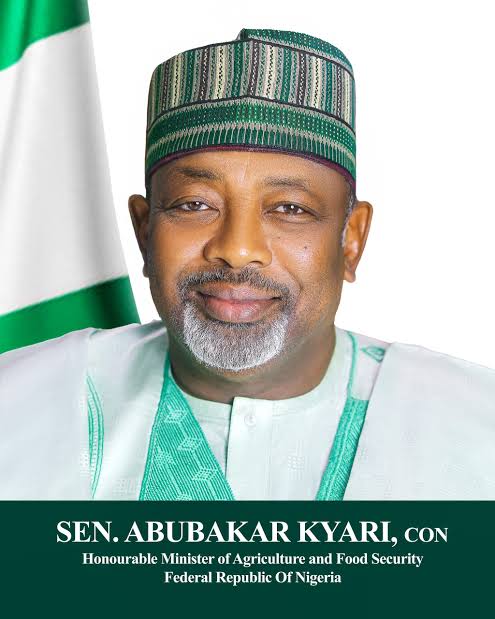
For Nigeria, the meeting carried added weight. The Minister of Agriculture and Food Security, , was elected Chairperson of the IFAD Governing Council. The position is more than symbolic. It places Nigeria at the head of deliberations on how development finance will flow into rural communities across the developing world. At a time when domestic resources are strained, such influence matters.
The Youth Question
Nigeria’s demographic structure is both a promise and a pressure point. Millions of young people enter the labour market each year, while formal employment growth lags behind. Agriculture remains one of the few sectors with the capacity to absorb labour at scale. Yet for many young Nigerians, farming is still associated with drudgery, uncertainty, and limited returns.
The message from Rome was that this perception can be changed, but only if risk is reduced.
The government’s strategy, as outlined at the session, centres on de-risking agribusiness for youth and women. That means improving access to affordable finance, expanding irrigation infrastructure, encouraging mechanisation, and supporting agro-processing ventures that move value beyond raw produce. It also means drawing private capital into spaces where it has traditionally been reluctant to go.
Agriculture in Nigeria is dominated by smallholders who operate with limited capital and weak links to markets. Young graduates with technical skills often struggle to secure loans because agriculture is seen as volatile. Development finance institutions like IFAD exist precisely to bridge that gap, blending concessional funds with domestic initiatives to lower barriers to entry.
From Production to Markets
The phrase “from farm to market” is not casual rhetoric. It signals a shift from focusing solely on production to building entire value chains. Increased yields mean little if farmers cannot store, transport, process, or sell their output at fair prices.
Post-harvest losses remain high. Processing capacity is insufficient. Rural roads are often in poor condition. These weaknesses discourage young entrepreneurs who seek predictable returns.
By prioritising agro-processing and market access, the new direction attempts to reposition agriculture as a business ecosystem rather than a subsistence activity. If irrigation reduces seasonal risk, mechanisation improves efficiency, and processing adds value, agriculture begins to resemble a structured enterprise.
Influence and Responsibility
Chairing the IFAD Governing Council offers Nigeria diplomatic leverage. It allows the country to shape discussions on financing frameworks, youth-focused initiatives, and climate-resilient agriculture across developing economies. It also provides an opportunity to attract partnerships and signal seriousness to investors.
Yet influence abroad carries responsibility at home.
The success of this moment will not be measured by applause in Rome but by results in rural Nigeria. Will financing reach actual young farmers, or remain trapped in bureaucratic channels? Will women entrepreneurs gain meaningful access to land and credit? Will mechanisation schemes function beyond pilot phases?
These are not minor questions. They determine whether the youth dividend becomes tangible growth or remains a recurring slogan.
A Narrow Window
Nigeria’s agricultural challenge is urgent. Food inflation erodes household incomes. Productivity gaps widen. Climate variability intensifies risk. At the same time, the country possesses fertile land, a large domestic market, and a restless generation eager for opportunity.
If multilateral partnerships can be aligned with transparent domestic execution, the current momentum could mark a turning point. De-risked agribusiness, supported by blended finance and market infrastructure, may finally attract young Nigerians in significant numbers.
The election of Abubakar Kyari to lead the IFAD Governing Council offers Nigeria a strategic seat at the table. What remains is the harder task: translating global influence into local transformation.
If that bridge is built, the phrase “youth in agriculture” will cease to be aspirational language. It will become data, income, and livelihoods across the countryside.