By Eneojo Herbert Idakwo
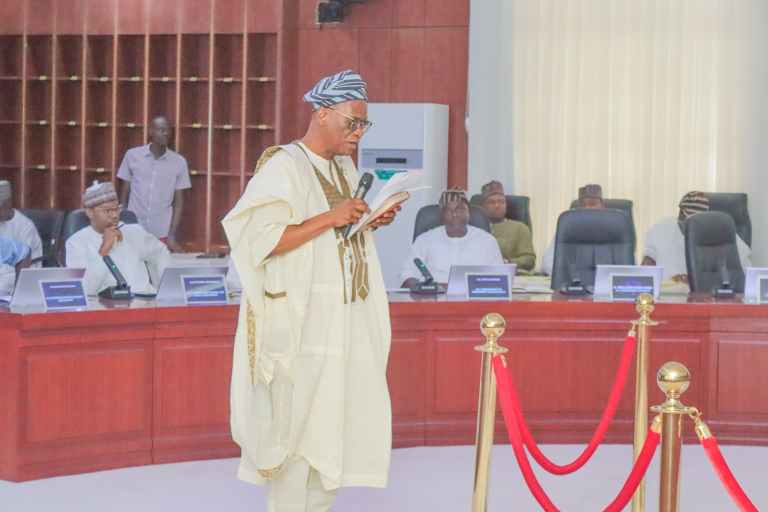
In what many are already describing as a game-changer for Kogi State’s agricultural landscape, Governor Ahmed Usman Ododo has taken a bold step by creating fresh momentum for the livestock sector. At the State Executive Council meeting in Lokoja recently, the governor swore in Dr. Olufemi Bolarin as the new Commissioner for Livestock Development, signaling the dawn of a new era for an industry that holds untapped promise.
The ceremony was more than just a routine political appointment; it was a declaration of intent. Governor Ododo, in his remarks, underscored the importance of innovation, partnership, and vision in turning Kogi’s livestock resources into a powerful driver of economic diversification. With the right strategies, he noted, the state can create jobs, boost food security, and uplift rural communities, while also reducing tensions between herders and farmers.
“Our livestock industry can be a unifying force,” the governor said, hinting at plans to use structured, sustainable livestock development as a bridge between farming communities and pastoralists. “If we get it right, everyone wins, farmers, herders, investors, and the state as a whole.”
The Secretary to the State Government, Mrs. Folashade Ayoade Arike, congratulated the new commissioner, urging him to embrace the administration’s spirit of togetherness in pursuing its ambitious goals.
Dr. Bolarin, whose career reflects years of service and commitment to agricultural development, accepted the role with a clear sense of mission. He expressed deep gratitude to Governor Ododo for the trust reposed in him, pledging to discharge his duties with diligence and results-driven action. “We have the land, we have the people, and we have the will. It is now our responsibility to turn these resources into prosperity for all,” he said.
For many in the state, especially farmers in the plains of Dekina and Ankpa, and herders along the Bassa and Ibaji belts, this appointment carries more than symbolic weight. The Ministry of Livestock Development is expected to roll out programmes that address grazing management, modern ranching techniques, and community-level conflict resolution.
Observers believe that with Dr. Bolarin’s expertise and the governor’s political will, Kogi has a rare opportunity to turn its livestock sector into a peace-building and wealth-creating engine. As one elder from Igalamela/Odolu put it, “When the cattle are well-managed and the farms are safe, there will be no reason for quarrels. This new ministry could be the answer we’ve been waiting for.”
As Dr. Bolarin settles into his new office, the stakes are high, but so are the expectations. The livestock industry in Kogi State is poised for transformation, and with careful planning, the benefits could ripple far beyond the state’s borders.
This is more than an appointment. It is the opening chapter of what could become a success story in agriculture, peacebuilding, and rural prosperity, a story Kogi cannot afford to miss.