By Eneojo Herbert Idakwo | Agribusiness Magazine
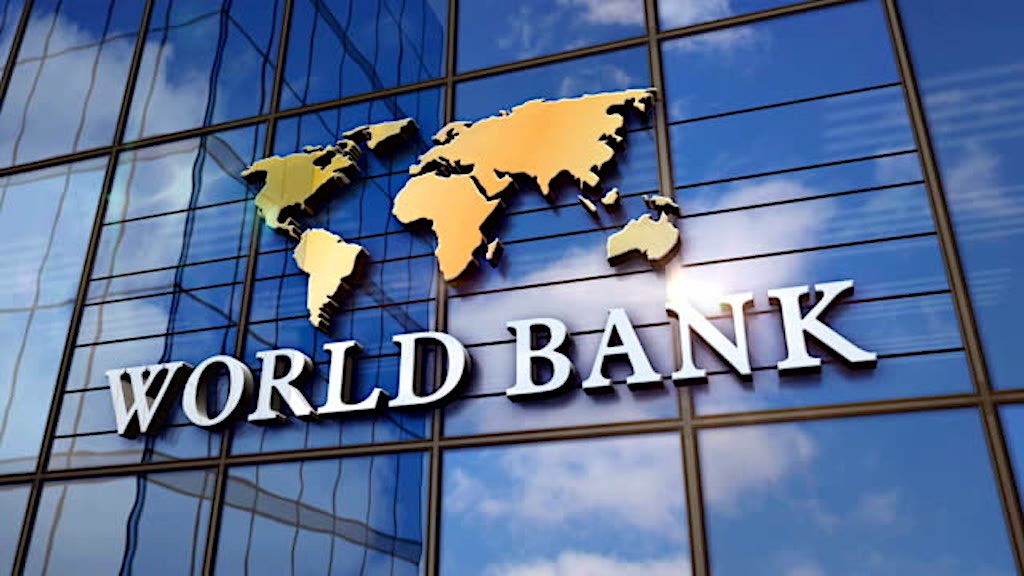
ABUJA, NIGERIA — The latest World Bank report estimating that 139 million Nigerians are living in poverty has ignited a fierce war of words — and ideas — between the Bretton Woods institution and the Nigerian government.
While the Bank insists the figure reflects a deepening crisis of living standards despite recent reforms, the Nigerian government has rejected the report outright, describing it as outdated, misleading, and detached from the country’s current realities under President Bola Ahmed Tinubu’s administration.
The episode has reopened old wounds in Nigeria’s long and uneasy relationship with international financial institutions — raising once again the question: Whose data defines Nigeria’s destiny?
Government Fires Back: “This Is Not Our Reality”
In a statement issued by the Special Adviser to the President on Media and Public Communication, Sunday Dare, the government said the data quoted by the World Bank must be “properly contextualised.” According to Dare, the figure was not based on any recent survey or field data but rather on modelled global poverty estimates using the $2.15 per person per day benchmark set in 2017 under the Purchasing Power Parity (PPP) framework.
“When converted to today’s exchange rate, this benchmark equals about ₦100,000 per month,” Dare explained. “That is higher than Nigeria’s new minimum wage of ₦70,000, which already places millions above that threshold. The World Bank’s measure is an analytical construct, not a direct reflection of local income realities.”
The Presidency argued that Nigeria’s last comprehensive household survey was conducted in 2018–2019, meaning that the data feeding the Bank’s model is at least six years old, and that it also fails to account for the informal and subsistence sectors that sustain a majority of Nigerians.
“It is therefore inaccurate to present the World Bank’s projection as an empirical statement on current living conditions in 2025,” Dare said. “Nigeria’s poverty trajectory is one of recovery and reform, not regression.”
Reform in Motion: A Case for Context
To buttress its argument, the Presidency outlined several ongoing programmes designed to reduce poverty and enhance social inclusion. Among them are:
- Conditional Cash Transfers (CCT): Expanded to reach 15 million households nationwide, with over ₦297 billion disbursed since 2023.
- Renewed Hope Ward Development Programme: Covering all 8,809 electoral wards, delivering micro-infrastructure and social services at the grassroots.
- National Social Investment Programmes (NSIPs): Revamped versions of N-Power, TraderMoni, MarketMoni, FarmerMoni, and the Home-Grown School Feeding Programme.
- Food Security Initiatives: Distribution of subsidised grains and fertilisers, mechanisation schemes, and the revival of strategic food reserves.
- Renewed Hope Infrastructure Fund: Financing energy, housing, and road projects to reduce living costs and create employment.
- National Credit Guarantee Company: Expanding access to affordable credit for SMEs, women, and youth.
Dare added that the administration’s medium-term focus is to ensure that macroeconomic stability — achieved through reforms such as fuel subsidy removal, exchange rate unification, and fiscal redirection — translates into tangible welfare gains for citizens through affordable food, quality jobs, and reliable infrastructure.
“The World Bank itself,” he noted, “has acknowledged that these reforms are contributing to macroeconomic stability and renewed growth momentum.”
The World Bank’s Counterpoint: Growth Without Welfare
But the World Bank is not backing down. At the launch of its latest Nigeria Development Update (NDU) in Abuja, the Bank’s Country Director for Nigeria, Mathew Verghis, acknowledged the government’s reforms but maintained that poverty and food insecurity remain alarmingly high.
“These are big achievements,” Verghis said, referring to improved fiscal indicators and a more stable naira. “However, despite these stabilisation gains, many Nigerians are still struggling. Most households are coping with eroded purchasing power. In 2025, we estimate that 139 million Nigerians live in poverty.”
He added that “the challenge is clear: how to translate macroeconomic gains into better living standards for all.”
The Bank’s Senior Economist, Samer Matta, noted that while Nigeria’s economy expanded by 3.9 percent in the first half of 2025 and foreign reserves climbed above $42 billion, food inflation remains the “biggest tax on the poor.” The cost of a basic food basket, he said, had risen fivefold between 2019 and 2024, underscoring how inflation, not growth, defines everyday life for most Nigerians.
The Bank advised Nigeria to sustain monetary discipline, expand social safety nets, and ensure public spending drives real development results that reach the poorest households.
A History of Contradictions: The Poverty Prescription Problem
To many observers, however, the World Bank’s latest intervention reeks of irony. The very institution now scolding Nigeria for poverty has, over the decades, shaped the policy environment that created structural poverty through austerity, liberalisation, and external dependency.
From Structural Adjustment Programs (SAPs) in the 1980s to today’s “market reform” frameworks, the World Bank’s economic advice has often produced short-term stability at the expense of local production and social welfare.
It was precisely this orthodoxy that the Anchor Borrowers’ Programme (ABP) of the Central Bank of Nigeria sought to break — injecting single-digit credit into productive sectors such as cotton, rice, maize, and sesame, giving millions of smallholder farmers temporary relief and lifting rural economies. Though the ABP has since been wound down, its short-lived success showed that domestic policy innovation, not foreign prescriptions, holds the real key to inclusive growth.
The Critics Weigh In
Not everyone is convinced by the government’s optimism. The Pan-Yoruba socio-political organisation, Afenifere, dismissed claims of economic turnaround as “media spin.”
“When a $10 billion subsidy with $200 billion production multiplier effects is removed, the economy falls by $200 billion,” the group said. “The question is: what happens to the seven million businesses that collapsed and the tens of millions pushed into poverty?”
Afenifere argued that real wages have fallen by nearly 300 percent, making any celebration of reform “unfounded.” The new ₦70,000 minimum wage, they noted, benefits less than five percent of the workforce, while inflation and devaluation have eroded the purchasing power of most Nigerians.
A Way Forward: Escaping the Foreigner’s Booby Trap
For Agribusiness Magazine, the controversy is not merely about data. It is about economic sovereignty — who sets Nigeria’s development agenda, and for whose benefit.
To escape what we call “the foreigner’s booby trap,” Nigeria must:
- Establish its own Economic Intelligence System to generate credible local data, ending dependency on global poverty models.
- Institutionalise single-digit financing for agriculture, expanding the Anchor Borrower Program’s legacy into a sustainable National Agricultural Credit System.
- Deepen domestic industrial capacity to process what Nigeria produces — from rice and cotton to cassava and cocoa — reducing import dependence.
- Prioritise South-South economic partnerships with countries like India, Brazil, and Indonesia that grew by defying IMF orthodoxy.
- Reclaim policy space in dealings with Bretton Woods institutions, negotiating from the standpoint of national priorities, not lender conditions.
Conclusion: From Borrower to Builder
The World Bank’s poverty figure may sting, but perhaps it is the reality check Nigeria needs — not because it is true, but because it reminds the nation of the cost of complacency and dependency.
A country that feeds West Africa cannot continue to be defined by foreign poverty models. If Nigeria must rise, it will do so not by borrowing blueprints, but by building its own.
As Agribusiness Magazine concludes:
“The war on poverty will not be won in Washington spreadsheets, but in Nigerian farmlands, factories, and policymaking tables — by Nigerians who believe in the dignity of their own data and destiny.”