By Eneojo Herbert Idakwo
Nigeria’s cashew industry stands at a defining moment. For more than two decades, the country has steadily risen to become one of the world’s leading producers of raw cashew nuts. Yet this success carries a quiet contradiction. Production has expanded, exports have grown, and foreign exchange earnings have improved, but the deeper benefits of industrialization, job creation, and value capture remain largely unrealized.
The first resolution adopted at the Fourth Annual Nigeria Cashew Day and Cashew Stakeholders Summit speaks directly to this tension. It affirms that the future growth of Nigeria’s cashew industry must rest on a balanced, market-driven framework that expands production, protects farmer incomes, and accelerates domestic value addition. This is not a rhetorical compromise. It is a recognition that no single objective can be pursued in isolation without damaging the entire value chain.
For years, policy debates around cashew have tended to swing between extremes. On one side are calls for aggressive industrialization through restrictions on raw exports. On the other are arguments for leaving the market entirely to export forces, even if the country remains trapped at the bottom of the value chain. Both approaches ignore a central truth. Farmers, processors, and exporters are not rivals. They are interdependent.
At the foundation of the industry are smallholder farmers, who account for the overwhelming majority of Nigeria’s cashew output. Their incentive to plant, maintain, and expand orchards is driven almost entirely by farmgate prices. Any policy that weakens this incentive risks shrinking production, increasing rural poverty, and undermining supply for processors themselves. History offers a cautionary lesson. Where export restrictions have been imposed without adequate domestic absorption capacity, farmers have borne the cost through collapsed prices and lost income.
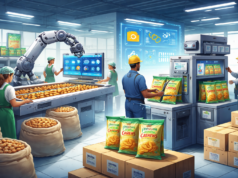
Yet the current export-heavy model also imposes its own long-term cost. With as much as 90 percent of Nigeria’s cashew exported in raw form, most of the value is captured abroad through processing, branding, and retail. The result is a paradoxical economy in which Nigeria supplies the raw material but imports finished or semi-finished products at far higher prices. Jobs that could have been created locally are instead created elsewhere.
The resolution’s emphasis on balance reflects a more mature understanding of industrial development. Expanding production without protecting farmer incomes is unsustainable. Protecting farmer incomes without building processing capacity locks the country into a commodity trap. Accelerating value addition without sufficient raw material supply or market incentives risks industrial failure. The three goals must move together.
A market-driven framework does not mean the absence of government. It means smart intervention rather than blunt controls. It means using incentives to make local processing competitive rather than forcing it through bans. It means investing in infrastructure, energy, finance, and logistics so that processors can operate efficiently. It means improving productivity at the farm level so that higher yields support both exports and domestic industry without pushing prices out of reach.
Countries that dominate agricultural value chains did not do so by punishing producers or isolating markets. They did so by aligning incentives across the chain. Farmers were guaranteed fair returns. Processors had access to finance and infrastructure. Exporters operated within predictable trade regimes. Nigeria’s cashew industry requires the same coherence.
The first resolution, therefore, is not merely a policy preference. It is a strategic warning. An unbalanced approach will fracture the value chain and weaken the sector. A balanced one can transform cashew from a raw export commodity into a pillar of industrial growth, rural prosperity, and non-oil foreign exchange.
If Nigeria gets this balance right, cashew can become more than a seasonal export earner. It can become a model for how agriculture drives inclusive industrial development. If it gets it wrong, the country risks repeating a familiar pattern of abundance without transformation.
The choice is no longer theoretical. It is now a matter of policy discipline, institutional coordination, and political will.