By Global Trade Reporter
A century after British and French cartographers sliced the Borgu Empire in two, creating a border that divided communities between Nigeria and Benin, a new map is being drawn, this time by the threads of the cotton trade.
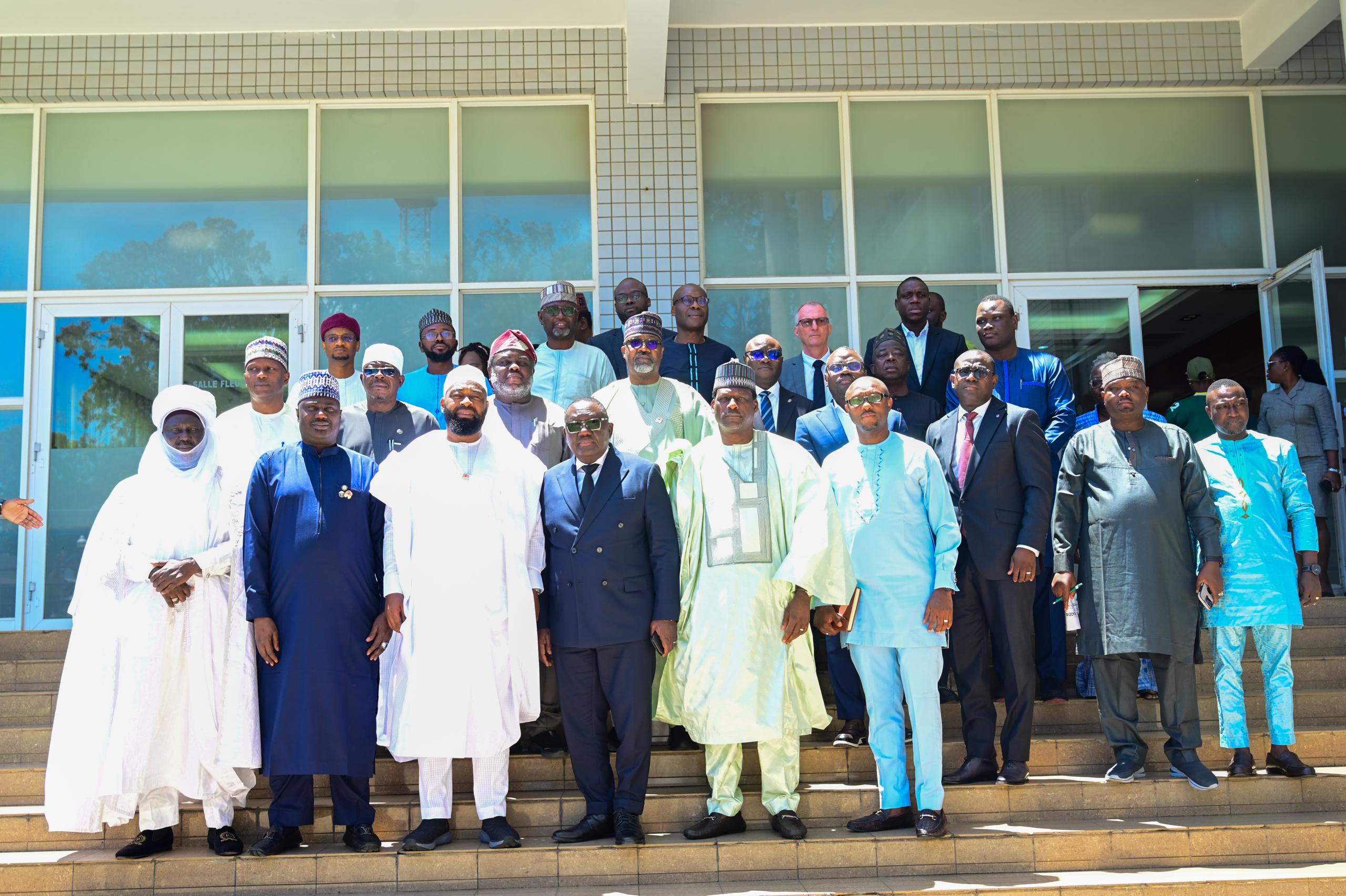
In a move that could preview the future of African commerce, the neighboring nations(Nigeria and Benin Republic) are leveraging their shared Borgu heritage to launch a cross-border cotton platform. The initiative, brokered by industry leaders and backed by both governments, represents an early test of the African Continental Free Trade Area (AfCFTA), which aims to create a single market for goods and services across 54 countries.
“We are not just reconnecting communities; we are rebuilding value chains severed by colonialism,” said Anibe Achimugu, President of Nigeria’s National Cotton Association (NACOTAN), who facilitated the talks. “This isn’t about sentiment. It’s about smart economics.”
The Colonial Divide
The historical Borgu kingdom, once a unified polity spanning what is now northwest Nigeria and northern Benin, was partitioned in 1898 by European powers. The split left villages and families on different sides of a surveyed line, administratively separated but culturally intact.
Today, the Nigerian segment lies within Niger State’s Borgu Local Government Area, while the western territory is incorporated into the Republic of Benin. Despite the division, the Bariba (or Borgawa) people maintain a common identity, which leaders are now using as social capital for economic integration.
Benin’s White Gold
On the Benin side, cotton is the undisputed engine of the formal economy. Dubbed “white gold,” the sector accounts for roughly 40% of the nation’s GDP and up to 80% of its export earnings, according to World Bank and Beninese government data.
Under President Patrice Talon—a former cotton magnate known as the “Cotton King”—Benin has aggressively moved up the value chain. The Glo-Djigbé Industrial Zone (GDIZ), located 45 kilometers from the economic capital Cotonou, now processes some 40,000 tonnes of cotton annually, producing between 7 million and 10 million garments a year.
“We have the quality, the volume, and increasingly, the industrial capacity,” said a senior official from Benin’s Ministry of Agriculture. “What we gain from a structured partnership with Nigeria is market scale and regional stability.”
Nigeria’s Revival Bid
Across the border, Niger State Governor Mohammed Umar Bago—dubbed the “Farmer Governor” for his aggressive agricultural policies—is pushing to revive a sector that has languished for decades. Nigeria’s cotton production fell to historic lows in recent years, plagued by poor yields, limited processing, and insufficient investment.
The new Cotton Common Platform, championed by Bago, aims to connect Nigerian cotton growers with Benin’s processing infrastructure and textile manufacturing expertise. The platform is designed to operate as a business-to-business and business-to-government marketplace, aligning with AfCFTA’s goal of boosting intra-African trade, which currently sits at just 15% of the continent’s total commerce.
“Governor Bago and President Talon are pragmatists. They see the massive opportunity in stitching these sectors together,” Achimugu said.
The Broader Canvas
The Borgu initiative emerges as AfCFTA seeks to move from agreement to action. While the trade pact officially began in 2021, implementation has been slow, hampered by logistical snarls, protectionist tendencies, and bureaucratic inertia.
Success in a clearly defined sector like cotton—where Benin has processing capacity and Nigeria has raw material potential—could offer a blueprint for other cross-border value chains.
“You start with a tangible, high-demand product, with clear complementarities,” said Ngozi Okonjo-Iweala, Director-General of the World Trade Organization, in a recent speech referencing West African integration. “The spin-offs in jobs, skills transfer, and economic resilience are immense.”
Challenges Remain
Still, the path is fraught with hurdles. Nigeria’s cotton farmers need significant support to increase yield and quality to match Benin’s industry standards. Logistics and customs harmonization at the border—long a hotspot for informal trade—will require political will and technical alignment.
“The vision is strong, but execution will be everything,” said a Lagos-based analyst with Songhai Advisory. “If they can simplify cross-border movement for cotton and textiles, it would be a major symbolic and commercial victory for AfCFTA.”
Looking Forward
As West Africa watches, the Borgu cotton project is more than a commercial venture—it is an attempt to redraw the economic map of Africa on its own terms. If successful, it could demonstrate that the continent’s colonial-era borders can be made porous not just for people, but for prosperity.
“This is how we reclaim our economic sovereignty,” Achimugu said. “One bale of cotton at a time.”
—With assistance from reporters in Cotonou and Abuja.