The Netherlands Arrives: From Promise to Practical Steps
By Eneojo Herbert Idakwo
On March 24, attention will turn to Lagos as the Netherlands takes centre stage at agrofood Nigeria 2026 as Guest of Honour. Titles like this are often ceremonial. This one carries weight.
The Netherlands is the world’s second-largest agricultural exporter after the . It achieved that status not through vast land mass, but through precision, science, and disciplined organisation of its food system. In a country smaller than many Nigerian states, Dutch farmers built a model that links greenhouse to port with little waste in between. That is why their presence in Lagos deserves careful reading.
This is not a study tour. It is a market visit.
For years, Nigeria has spoken of potential. We have fertile land, a large domestic market, and a young workforce. Yet harvest losses remain high. Cold storage is scarce. Processing capacity is thin. Seeds are inconsistent. The result is a cycle of abundance and scarcity. Tomatoes rot in one state while paste is imported in another.
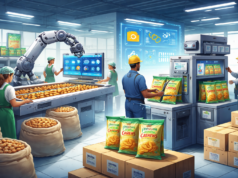
The Dutch delegation is expected to focus on four areas: food processing, cold chain logistics, horticulture, and seed technology. These are not glamorous themes. They are the plumbing of a modern food economy. Without them, production gains collapse under their own weight.
Consider cold chain logistics. Nigeria grows fruits and vegetables in volume, yet much of it spoils before reaching urban markets. The Netherlands built an export empire by mastering temperature control from farm to ship. It treats post-harvest handling as seriously as planting. If Nigeria is to reduce waste and stabilise prices, that discipline must take root here.
Seed technology is equally decisive. Yield begins with genetics. Dutch horticulture thrives on research-backed varieties suited for specific climates and markets. Nigeria’s seed system remains uneven, with farmers often recycling grains that were never designed for high productivity. Better seeds are not a luxury. They are the starting point of efficiency.
The broader message of agrofood Nigeria 2026 is that the national conversation is shifting. As organisers observed, the question is no longer whether Nigeria can produce food. It is how quickly the country can industrialise its food system.
That language marks a change in tone. Industrialisation implies scale, standards, and structure. It means moving from farm gate to factory floor. It means seeing agriculture not as subsistence, but as supply chain.
The presence of macroeconomic voices such as Bismarck Rewane and Dr. Yemi Kale reinforces that shift. Agriculture is no longer discussed in isolation from fiscal policy, exchange rates, or trade competitiveness. Food has become an economic strategy.
This matters in the context of the . AfCFTA promises a single African market. Yet open borders favour those with organised systems. Countries that can process, package, and certify at scale will dominate regional shelves. Those that export raw produce will remain price takers.
Nigeria stands at a crossroads. It can continue exporting commodities and importing finished goods, or it can build the infrastructure that converts harvest into value. The Netherlands offers a working template. The question is whether Nigeria is ready to absorb it.
There is also a note of caution. Technology alone does not reform a sector. Institutions must function. Power supply must be reliable. Finance must be patient. Local capacity must grow alongside foreign partnership. If Dutch firms simply sell equipment without embedding knowledge, little will change.
Yet partnership done well can shorten the learning curve. The Netherlands did not rise by chance. It invested heavily in research, extension services, and farmer education. It linked universities with industry. It treated agriculture as a knowledge economy.
Nigeria’s food challenge is no longer about planting more hectares. It is about building systems that make each hectare count. The arrival of the Netherlands at agrofood Nigeria 2026 may well signal that the era of speeches about potential is giving way to conversations about execution.
If that shift holds, March 24 may be remembered less for ceremony and more for clarity.