By Eneojo Herbert Idakwo
As Nigeria marks its 65th Independence Anniversary, attention inevitably turns to the policies shaping the nation’s economic survival. Agriculture, the backbone of Nigeria’s pre-oil economy, has once again assumed centre stage under President Bola Ahmed Tinubu’s administration. With food inflation at record highs and 30.8 million Nigerians facing food insecurity, the government has rolled out a raft of reforms aimed at transforming the sector from subsistence to productivity-driven agribusiness.
This anniversary offers a fitting moment to take stock of where the country stands, the reforms in motion, and the outcomes they are designed to achieve.
A Shift in Focus: From Rhetoric to Reform
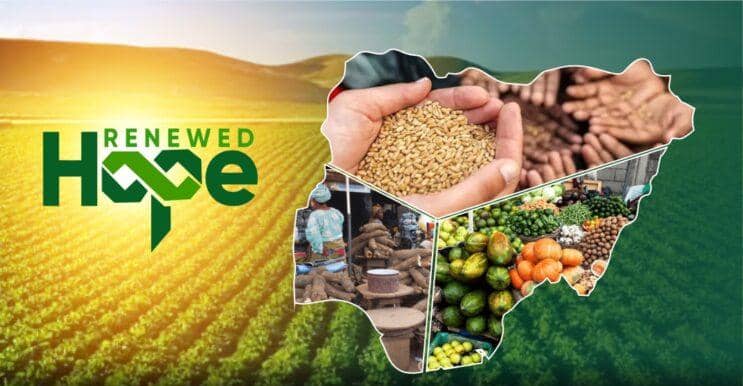
Successive Nigerian governments have declared agriculture a priority, yet the sector has often been hamstrung by inconsistent policies, limited financing, and weak infrastructure. Tinubu’s government has signaled its intent to break from this cycle by making agriculture a central pillar of its Renewed Hope Agenda.
At the heart of this approach is the Presidential Food Systems Coordinating Unit (PFSCU), established to harmonize fragmented policies, engage the private sector, and accelerate delivery of reforms. The Vice President, Kashim Shettima, chairs the steering committee, underscoring the political weight behind the initiative.
Key Reforms in Motion
- ₦250 Billion Credit Support for Smallholder Farmers
The flagship policy is the ₦250 billion credit facility to be disbursed through the Bank of Agriculture at single-digit interest rates. Targeted at smallholder farmers—the mainstay of Nigeria’s food production—the facility is expected to boost access to capital, expand cultivated areas, and increase yields.
Governors and stakeholders, however, stress that the real challenge lies in ensuring the funds reach genuine farmers rather than being captured by political or commercial elites. To this end, the PFSCU has been tasked with developing a robust roadmap for disbursement.
- Liberalisation of Fertiliser Raw Materials
One of the boldest reforms has been the liberalisation of fertiliser raw materials. Long constrained by bureaucratic bottlenecks and monopolistic structures, the sector is now being opened up to competition. The goal is to drive down the cost of fertilisers, improve access for farmers, and encourage innovation in blending and distribution.
The expected outcome is a more dynamic input market, where farmers no longer face chronic shortages or inflated prices.
- The Presidential Seed Fund (₦50 Billion)
The administration has also approved a ₦50 billion seed fund to strengthen Nigeria’s seed sector. Quality seeds remain the bedrock of productivity, yet decades of neglect have left farmers dependent on uncertified or recycled seeds.
The fund aims to revitalise research institutes, support certified seed producers, and expand seed multiplication and distribution networks. If successful, it could significantly raise crop yields and ensure Nigerian farmers remain competitive.
- Insurance and Risk Mitigation
In a country where farming is fraught with risks—from floods and droughts to pests and disease outbreaks—the expansion of agricultural insurance is a noteworthy step. Already, 250,000 farmers have been insured under the National Agribusiness Policy Mechanism (NAPM). This is meant to cushion farmers against shocks, de-risk the sector for financiers, and encourage more investment.
- Strategic Grain Reserve Expansion
The government has revived interest in expanding the National Strategic Grain Reserve. Stockpiling grains during periods of surplus is intended to stabilize food prices and provide emergency supplies during crises. In theory, this offers a buffer against inflationary spikes and strengthens national food security.
- International Partnerships: The AGROW Programme
Nigeria has also secured support through the World Bank–backed $500 million AGROW programme, designed to modernize value chains, promote mechanisation, and improve rural infrastructure. Coupled with domestic reforms, this partnership highlights the administration’s willingness to leverage global capital for national priorities.
The Broader Context: Why Agriculture Matters Now
Nigeria’s economy remains vulnerable to global oil price fluctuations, but agriculture—employing over 70% of the population—offers a path to inclusive growth. At a time when food inflation has surged to double digits, and insecurity has disrupted farming in parts of the North, agricultural reform is both an economic necessity and a political imperative.
The government hopes that with improved access to credit, inputs, and insurance, farmers will produce more food, thereby easing inflation, creating jobs, and stabilizing rural communities.
Challenges on the Horizon
Yet, as with all ambitious policies, execution will determine success. Experts warn of:
Leakages and corruption in fund disbursement.
Logistical bottlenecks, including poor rural roads and storage facilities.
Security threats, with banditry and farmer-herder conflicts reducing access to farmlands.
Climate change shocks, ranging from erratic rainfall to flooding.
These challenges could blunt the impact of reforms unless matched by strong governance and sustained investment.
Looking Ahead: From Policy to Productivity
At 65, Nigeria stands at a crossroads. The Tinubu administration has put forward reforms that—if fully implemented—could unlock the nation’s long-elusive agricultural potential. The intended outcomes are clear: cheaper inputs, higher yields, better credit, stronger safety nets, and ultimately, a reduction in the number of food-insecure Nigerians.
But the road ahead is steep. The success of Nigeria’s agricultural policy will depend not just on government resolve but on coordination across states, private sector involvement, and the resilience of farmers themselves.
As Nigeria reflects on its 65 years of nationhood, the story of agriculture remains unfinished. The coming years will reveal whether these policies become another chapter of unfulfilled promises or the beginning of a true transformation of Nigeria’s food systems.